
Stargazing Around Zion
Learning the night sky, while learning how to care for it
Wander Well | Field NotesSome landscapes reveal themselves best after dark.
Zion is one of them.
As the sun sets behind sandstone walls and the desert begins to cool, the night sky slowly appears—layer by layer, star by star. In and around Zion National Park, darkness is not an absence but a presence—protected, intentional, and deeply connected to the health of the land itself.
This field note offers guidance for experiencing Zion’s night skies with curiosity, care, and respect—for both the place and the moment.
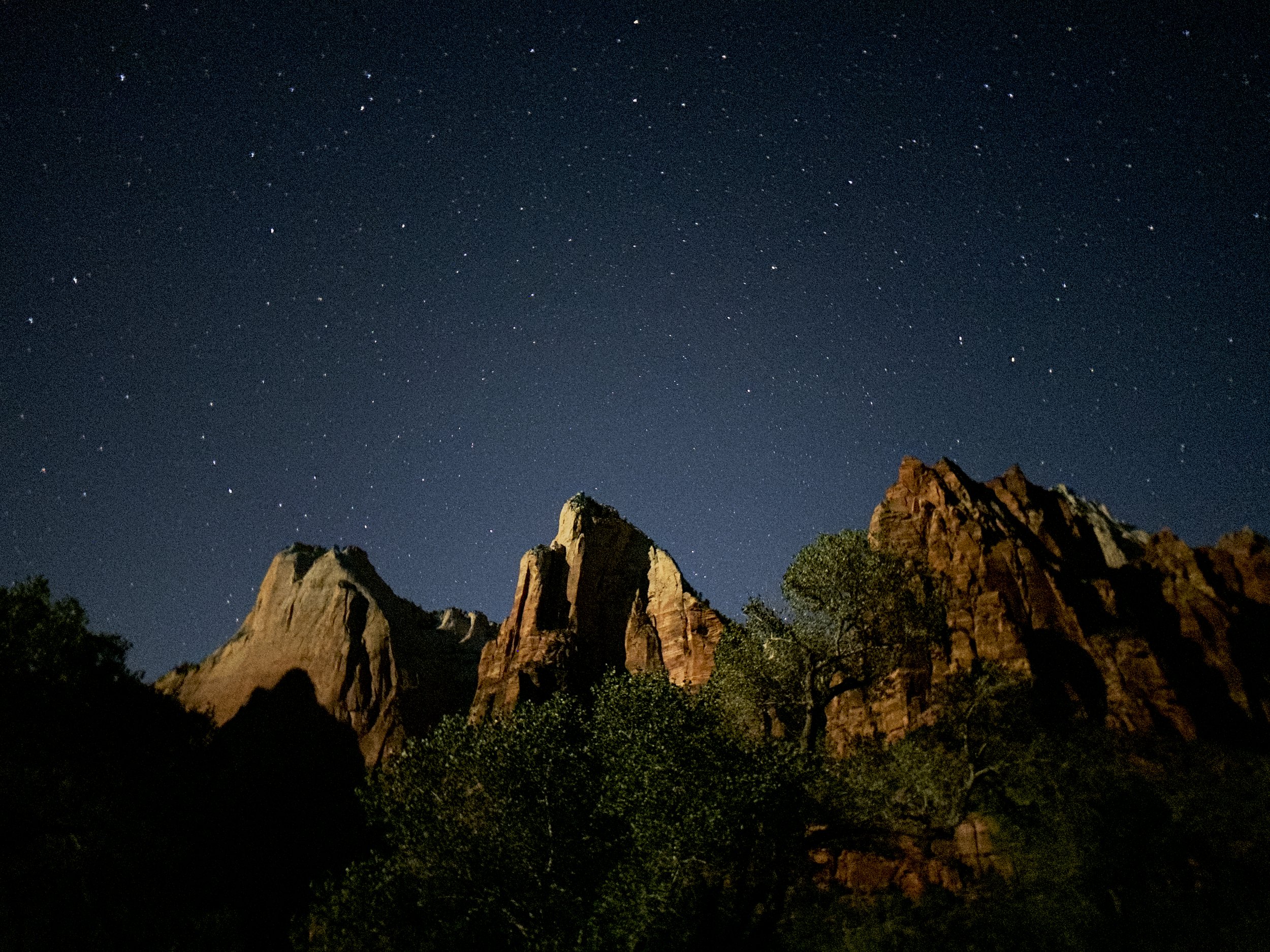
Timeless stone. Endless sky. The Court of the Patriarchs, Zion National Park.
Why Zion’s Night Sky Matters
Zion’s location, elevation, and surrounding protected lands create some of the darkest skies in southern Utah. But darkness here is more than just a scenic feature—it’s an ecological one.
The National Park Service recognizes night skies as a natural resource. Darkness supports nocturnal wildlife, regulates plant cycles, and preserves the rhythms that desert ecosystems depend on. For visitors, it offers something quieter but equally vital: perspective.
Stargazing in Zion isn’t about identifying every constellation. It’s about understanding where you are—and how small, and connected, you truly are.
Places to Experience the Night Sky
-
Well-suited for easy access and first-time experiences
Moderate darkness, later star emergenceWithin the canyon, towering walls delay complete darkness but create a dramatic frame once the sky opens.
Bright stars, planets, and seasonal constellations are often visible, especially later in the evening.Limited horizon views due to canyon walls
The Pa’rus Trail offers a beautiful, fully paved path where you can enjoy watching the sunset as you walk along the bubbling Virgin River
Pull-outs and shuttle stop areas provide safe places to pause when shuttles are not in season.
Refer to Zion National Park’s website for shuttle schedules and information.
Ideal for shorter, reflective stargazing moments
Nama-Stay Note:
This is a wonderful place to begin—no planning required beyond slowing down. Let your eyes adjust, and notice how the canyon shapes the sky above you. -
Via State Route 9
Well-suited for wider skies and Milky Way viewing
Darker, more expansiveEast of the Zion–Mount Carmel Tunnel, the landscape opens, and light pollution drops significantly.
Slickrock, elevation, and fewer nearby structures make this one of the park’s most rewarding areas for night-sky viewing.Excellent visibility on clear, moonless nights
Cooler evening temperatures
Frequently referenced by the National Park Service as a prime night-sky corridor
This area invites longer pauses—and deeper noticing.
-
Well-suited for solitude and deeper darkness
Very dark, especially at higher elevationsAs the road climbs away from Springdale, artificial light quickly disappears. The higher elevation and increased distance from town create a darker, quieter environment that feels noticeably different from the main canyon.
Fewer vehicles after sunset
Clear views of star fields and, seasonally, the Milky Way
Cooler temperatures year-round
For public safety, the road may be closed due to specific weather conditions.
Nama-Stay Note:
This is a place to listen as much as to look. If you decide to stop, do so safely and briefly—darkness here commands respect, not disturbance. This road is winding, with some sections featuring steep drop-offs. Please drive carefully and responsibly. -
Well-suitedfor dedicated stargazing excursions and astrophotography
Exceptionally dark, expansive skies at high elevationFor those open to traveling beyond Zion, Cedar Breaks National Monument offers an entirely different night-sky experience. Sitting at more than 10,000 feet above sea level, the monument pairs cooler temperatures and open horizons with some of southern Utah’s clearest, darkest skies.
Designated as an International Dark Sky Park, Cedar Breaks is especially rewarding on clear, moonless nights. Its overlooks offer opportunities to watch the stars emerge above the monument’s geologic amphitheater, while the surrounding forests, meadows, and scenic drive provide a beautiful change of landscape from Zion.
Exceptional conditions for stargazing and astrophotography
Cooler temperatures, even during summer
Hiking, scenic overlooks, and night-sky viewing can be combined into a longer outing
A separate destination that requires additional driving and preparation
Nama-Stay Note:
Cedar Breaks is farther from Springdale, but the journey offers cooler air, changing landscapes, and a quieter sense of discovery. On a clear night, the elevation and darkness can make the stars feel almost close enough to touch. Bring warm layers, even in summer, and check current weather, access, and road conditions before departing.
-
Well-suited for gentle evenings and accessibility
Partial darkness with visible constellationsWhile nearby lights soften the sky, Springdale still offers moments of connection—especially with bright stars, planets, and meteor showers.
Easy to enjoy after dinner or a short walk
No driving or preparation needed
A meaningful introduction for children or early nights
Even here, looking up can refresh your day. So grab a blanket, bundle up, and lie on the Nama-Stay lawn to enjoy a peaceful night without extra travel.
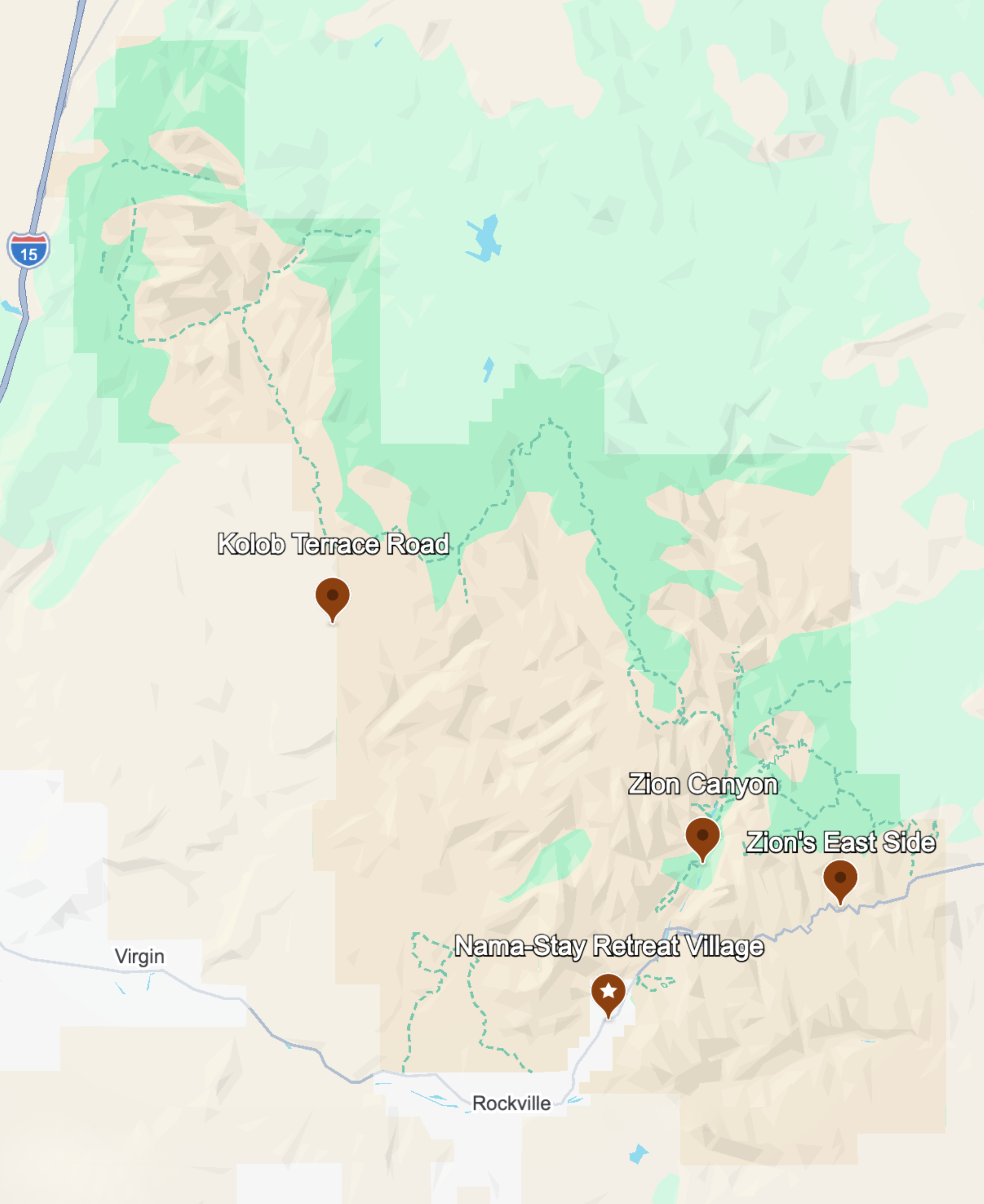
Map showing the location of Nama-Stay Retreat Village and recommend stargazing locations.

Where cliffs meet stars. Angels Landing, Zion National Park.
When to Stargaze
Night-sky visibility depends on a few key factors:
Moon phase: New moon or near-new moon offers the darkest skies
Season: Late spring through early fall prodvides warmer, clearer nights
Timing: One to two hours after sunset allows eyes to adjust fully
Conditions: Clear, dry air is essential
The National Park Service regularly shares moon calendars, night-sky conditions, and seasonal ranger-led astronomy programs—an excellent place to check before heading out.
What Supports a Good Night-Sky Experience
Stargazing here is simple, but preparation helps.
Bring
A warm layer (desert temperatures drop quickly)
Water
A flashlight or headlamp with a red-light option
A blanket or a low chair for comfort
Consider Leaving
Bright white lights
Music or speakers
The expectation of constant activity
Allow your eyes and your pace to adjust.
Practicing Night-Sky Stewardship
Zion’s darkness exists because it is cared for. When stargazing, please:
Use designated pull-outs only
Keep voices low and lights dim
Avoid shining lights into the landscape or sky
Follow Leave No Trace principles
Protecting darkness ensures future visitors and wildlife can experience it fully.
Trusted Resources
For accurate, conservation-focused guidance:
National Park Service – Zion Night Sky & Astronomy Resources
International Dark Sky Association (for broader education)
Cedar Breaks National Monument – Night Sky Programs, Current Conditions & Visitor Information
Returning to Rest
Stargazing in Zion isn’t something to complete.
It’s something to step into, then gently step away from.
When the night has offered what it will, Nama-Stay is a quiet place to return to.
Close to the park, grounded in the desert, and designed for rest after connection.
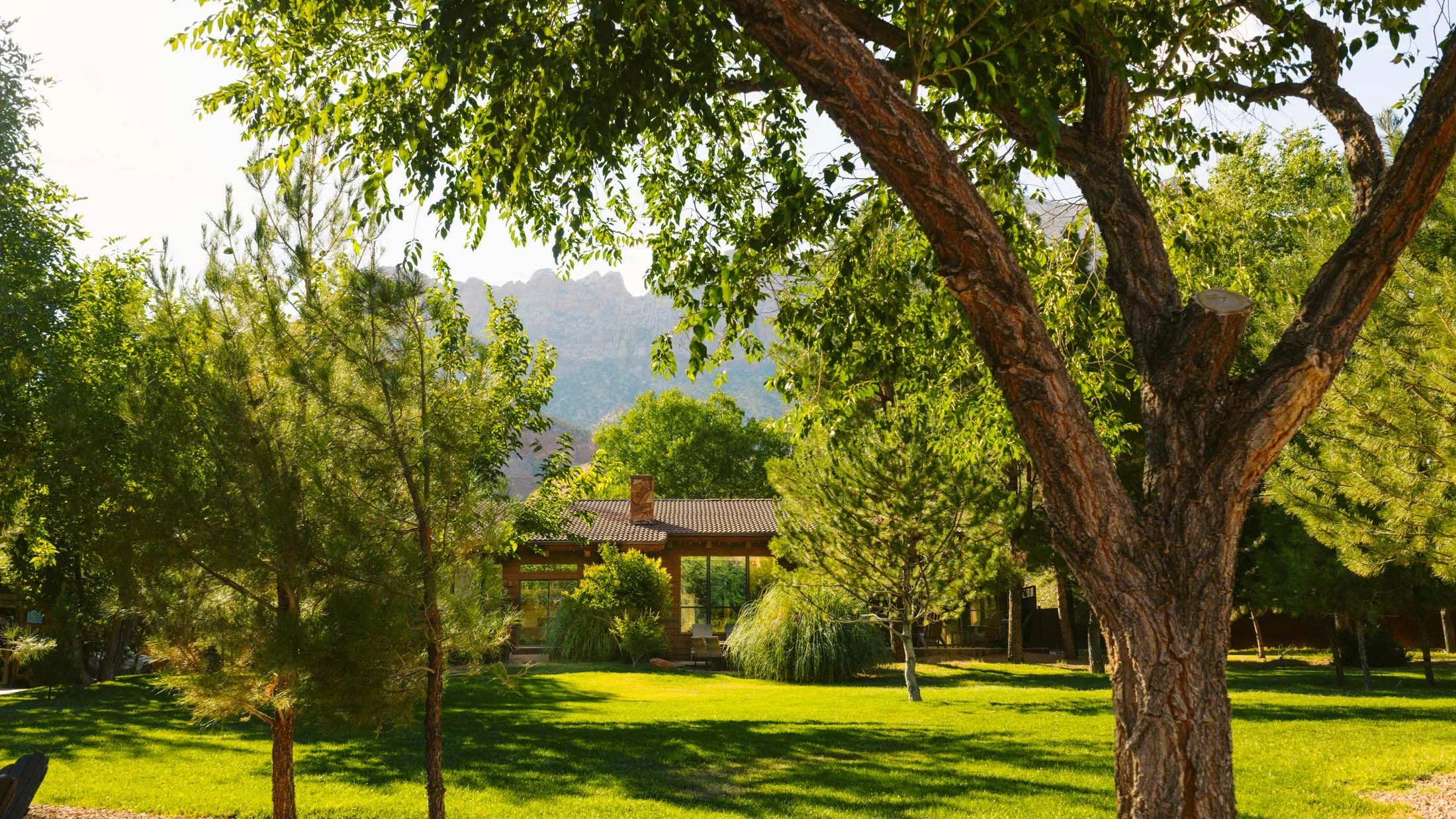
A sanctuary for rest, reflection, and return